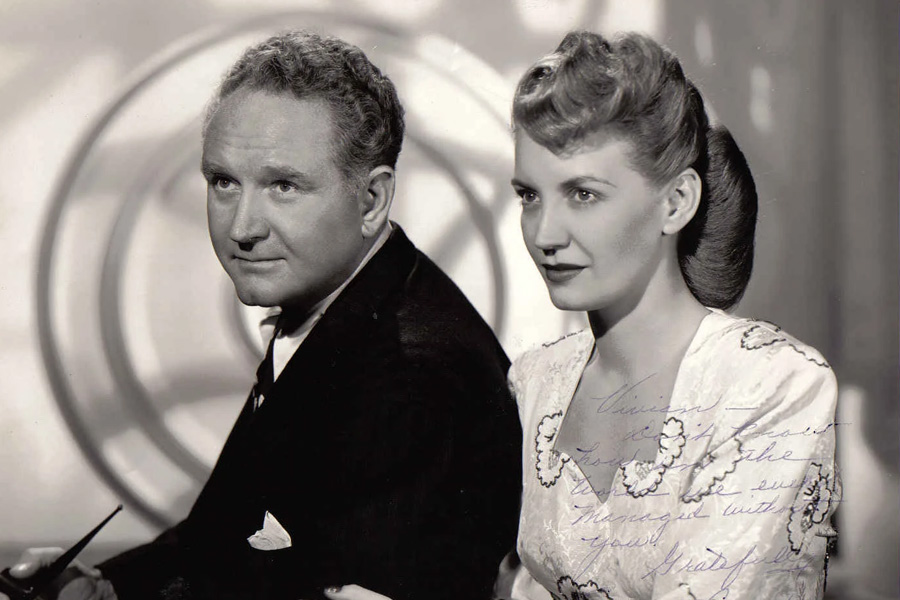
| Basic Information | Details |
|---|---|
| Full name | Edna Stillwell Skelton |
| Also known as | Edna Marie Stillwell, Edna Skelton |
| Born | May 25, 1915 |
| Birthplace | Missouri, United States |
| Died | November 15, 1982 |
| Place of death | Torrance, California, United States |
| Known for | Writer, manager, and first wife of Red Skelton |
| Spouses | Red Skelton, Frank Borzage, Leon George Pound |
| Public role | Behind the scenes creative force in comedy radio and entertainment |
A Woman Who Helped Build the Spotlight
Edna Stillwell Skelton was likely one of those folks who stood offstage as the light fell on someone else yet helped shape it. Her name is eternally linked to Red Skelton, but that’s just the beginning. She was more than wife. She was a manager, writer, strategist, and steady hand as Red worked to become a great American entertainer.
Edna was born in Missouri on May 25, 1915, into a humble household. George Vincent and Dollie Belle Tarwater Stillwell were her parents. She had siblings Ethel, Orville, and Frances. Her family background shapes her story. Hollywood did not launch her. Practical skills were valued in her environment, where individuals learned to labor, adapt, and move.
Early Life and Family Roots
Edna’s family life appears to have been marked by change early on. Her father was drafted during World War I, and her parents later divorced. Those details suggest a childhood shaped by uncertainty, which may have sharpened her independence. I see in that early environment the roots of the woman she became. She was not passive. She was used to managing reality as it came.
Her siblings formed part of that early support system. Ethel, Orville, and Frances are not widely documented as public figures, but they still belong in the portrait of Edna’s life. A family tree can sometimes look like a plain list on paper, but in real life it is a web of voices, habits, arguments, loyalties, and shared memory. Edna came out of that web carrying a sharp sense of responsibility.
The Marriage That Became a Career Partnership
Edna met Red Skelton in Kansas City during the energetic, working-world years before television made him a household name. She first encountered him through entertainment work, and the relationship grew from there. They married on June 1, 1932. That date marks the start of one of the most unusual partnerships in show business.
Their marriage was not simply romantic. It was a forge. Edna helped shape Red’s act, wrote material when he needed it, handled business dealings, and pushed his pay upward when others tried to keep it low. She was the kind of person who could stand in a crowded room and quietly change the outcome. Red’s success was not built by applause alone. It was also built by discipline, timing, and material that landed cleanly. Edna helped provide all three.
She had a real hand in the comedy itself. She is credited with helping create routines and characters that became closely associated with Red, including the “Doughnut Dunkers” material and the “Junior” persona, remembered by audiences through the phrase “I dood it!” That line became part of popular entertainment history, but behind it stood a woman who understood comic rhythm like a musician understands a melody.
The Work Behind the Curtain
Edna’s career is best understood as a blend of writing, management, and coaching. She was not only helping with jokes. She was helping with the entire machine. That machine needed fuel, direction, and repair.
She worked with Red in radio and helped guide the practical side of his rise. She knew how to read a contract, how to press for better pay, and how to keep a performer from drifting into chaos. In some ways, she was a thermostat for the whole operation, keeping the temperature steady while the pressure rose.
Her role became even more impressive because she did not disappear after the marriage ended. Their divorce came in 1943, but the professional bond continued for years. That tells me something important about Edna. She was not there just because of marriage. She had value in her own right. Her talent remained useful after the personal relationship changed shape.
She also worked in radio under her own name, which is an important detail. It shows that she did not live only in the shadow of Red Skelton’s fame. She stepped into the industry as a contributor with her own identity intact, even if history often tries to compress her into the role of “wife.”
Later Marriages and Personal Life
After Red Skelton, Edna married Frank Borzage in 1945. Borzage was a film director, which means her life stayed connected to the entertainment world even after the first great partnership ended. Their marriage ended in divorce in 1949.
In 1963, Edna married Leon George Pound, a businessman. That marriage lasted until his death in 1976. These later relationships show a woman whose personal life continued to evolve across decades. She was not frozen in the story of one famous marriage. She moved through time, through roles, and through changing circumstances.
I find that part of her life especially human. Public memory often stops at the first marriage, the famous name, the most dramatic chapter. But a full life keeps going. Edna’s life kept going through another husband, another household, another stretch of years that belonged to her and not to the legend around her.
Family Members and Personal Relationships
The persons who shape Edna’s tale are:
George Vincent Stillwell, her father, started her family. He symbolizes her working-world start and wartime childhood disturbance.
Another important parent was her mother, Dollie Belle Tarwater Stillwell. Her family identity is based on her, yet little is known about her.
Her childhood revolves around her siblings Ethel, Orville, and Frances. Their names indicate that Edna was raised in a family, even if history doesn’t record anything about them.
She partnered and worked with her first husband, Red Skelton. Their marriage was one of the few that combined love, work, and ambition.
Frank Borzage, her second husband, introduced her to film.
Her third husband, Leon George Pound, signified a transition from stage to home life.
My Edna doesn’t read like a footnote. She reads hingestyle. Several lives changed because of her.
Why Her Story Still Matters
Edna Stillwell Skelton matters because she complicates the simple story of celebrity. Popular history often prefers a bright figure at center stage and leaves the surrounding people in soft focus. But Edna was not soft focus. She was structure. She was the scaffolding hidden under the set.
She shows how much entertainment depends on invisible labor. A joke is not just a joke. It is testing, trimming, timing, and sometimes a voice in the next room saying, no, try it this way. A career is not just talent. It is negotiation, organization, and someone willing to push when others hesitate. Edna did that work.
FAQ
Who was Edna Stillwell Skelton?
Edna Stillwell Skelton was a writer, manager, and the first wife of Red Skelton. She helped build his career from the ground up and contributed directly to his comedy material and professional success.
Who were Edna Stillwell Skelton’s family members?
Her known immediate family included her father, George Vincent Stillwell, her mother, Dollie Belle Tarwater Stillwell, and her siblings Ethel, Orville, and Frances. She later had three husbands: Red Skelton, Frank Borzage, and Leon George Pound.
Did Edna Stillwell Skelton work in entertainment herself?
Yes. She worked as a writer and manager, and she also participated in radio work. Her role was active and practical, not decorative.
What was her relationship with Red Skelton like?
Their relationship was both personal and professional. They married in 1932, worked closely together, divorced in 1943, and still maintained a working connection afterward. She helped shape his material, manage his career, and strengthen his rise to fame.
Did Edna Stillwell Skelton have children?
I do not have reliable public information confirming children for her. The available records focus more on her marriages, parents, siblings, and work with Red Skelton.
What made Edna Stillwell Skelton important?
She mattered because she helped build the comedy career that made Red Skelton famous. She was one of the people behind the curtain who kept the performance standing tall, like a strong beam beneath a bright marquee.